 CERÂMICA LOWIFAR
A Crescente Procura por Peças de Flange de Cerâmica de Precisão
À medida que as indústrias modernas continuam a expandir os limites de desempenho, a fiabilidade, e eficiência operacional, os componentes metálicos tradicionais estão cada vez mais a ser desafiados por cerâmicas de engenharia avançadas. Entre estes componentes especializados, As Peças de Flange de Cerâmica de Precisão tornaram-se uma solução crítica para aplicações que exigem resistência excepcional ao desgaste, resistência à corrosão, isolamento elétrico, e estabilidade dimensional.
As flanges de cerâmica de precisão são amplamente utilizadas na fabricação de semicondutores, Processamento químico, equipamentos médicos, sistemas aeroespaciais, tecnologias de energia, e maquinaria de alta precisão. A sua capacidade de operar em ambientes extremos onde os metais convencionais podem falhar torna-as um componente cada vez mais importante nos sistemas industriais modernos.
What Are Precision Ceramic Flange Parts?
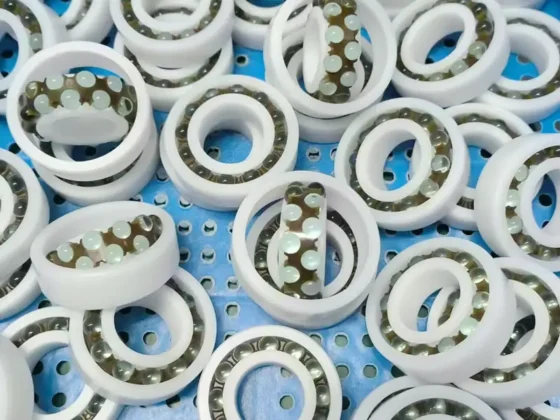
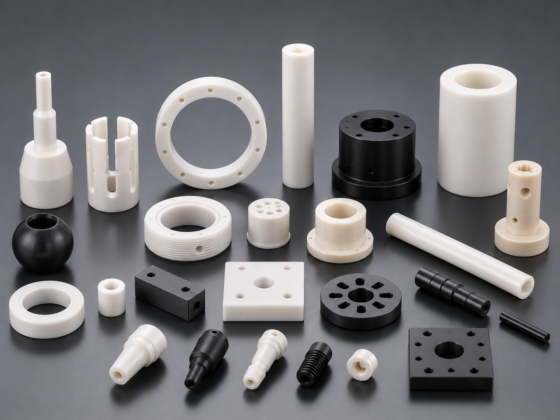
A ceramic flange is a precision-machined component featuring a flange structure used for positioning, sealing, connecting, or supporting mechanical assemblies. Unlike traditional steel or aluminum flanges, ceramic flanges are manufactured from advanced technical ceramics and are designed to withstand aggressive operating conditions.
Through advanced CNC machining, grinding, lapping, and polishing processes, ceramic flange components can achieve tight dimensional tolerances and superior surface finishes, making them suitable for high-precision assemblies.
Common ceramic flange configurations include:
- Flat flanges
- Stepped flanges
- Threaded ceramic flanges
- Vacuum sealing flanges
- Customized precision ceramic flange components
Common Materials Used for Precision Ceramic Flanges
Alumina Ceramic (Al₂O₃)
A alumina é o material cerâmico de engenharia mais amplamente utilizado devido ao seu excelente equilíbrio de propriedades mecânicas e elétricas.
Principais características:
- Alta dureza
- Excelente resistência ao desgaste
- Excecional isolamento elétrico
- Boa resistência à corrosão
- Fabrico económico
As classes de pureza normalmente disponíveis incluem:
- 95% Alumina
- 99% Alumina
- 99.5% Alumina
- 99.7% Alumina
Cerâmica de zircônia (ZrO₂)
A zircónia é conhecida pela sua excecional tenacidade e resistência a fissuras em comparação com outros materiais cerâmicos.
Vantagens incluem:
- Alta tenacidade à fratura
- Superior resistência mecânica
- Excelente resistência ao desgaste
- Baixa condutividade térmica
- Alta estabilidade dimensional
As peças cerâmicas de flange de zircónia são frequentemente escolhidas para conjuntos de precisão com alta carga e aplicações em equipamento médico.
Nitreto de Silício (Si₃N₄)
O Nitreto de Silício combina alta resistência com baixa densidade, tornando-o adequado para aplicações mecânicas exigentes.
Benefícios incluem:
- Resistência a altas temperaturas
- Excellent thermal shock resistance
- Low friction coefficient
- High mechanical reliability
- Outstanding fatigue performance
Carboneto de Silício (SiC)
Silicon Carbide offers exceptional hardness and chemical resistance.
As aplicações típicas incluem:
- Chemical processing equipment
- Pump systems
- Valve components
- Equipamentos de fabrico de semicondutores
Key Advantages of Precision Ceramic Flange Parts
Resistência Excecional ao Desgaste
Engineering ceramics are significantly harder than hardened steel, providing extended service life in abrasive operating environments.
Elevada resistência à corrosão
Ceramic materials resist attack from acids, alcalis, solventes, and corrosive gases, making them ideal for chemical and pharmaceutical industries.
Electrical Insulation Performance
Unlike metallic flanges, ceramic flanges provide excellent dielectric properties, preventing electrical leakage and improving system safety.
High Temperature Capability
Muitos materiais cerâmicos avançados mantêm as suas propriedades mecânicas a temperaturas superiores a 1000°C, tornando-os adequados para ambientes térmicos extremos.
Design leve
Certos materiais cerâmicos oferecem menor densidade do que o aço, mantendo excelentes relações resistência/peso, contribuindo para a eficiência dos equipamentos.
Estabilidade Dimensional
Peças de flange cerâmica de precisão apresentam expansão térmica mínima e mantêm a precisão dimensional sob condições operacionais variadas.
Aplicações Típicas de Peças de Flange Cerâmica de Precisão
Indústria de semicondutores
A indústria de semicondutores requer materiais ultra-limpos e altamente estáveis para o processamento de wafers e sistemas de vácuo.
Flanges cerâmicas são comumente usadas em:
- Câmaras de vácuo
- Sistemas de manuseio de wafers
- Equipamentos de processamento por plasma
- Dispositivos de inspeção de semicondutores
Equipamentos de Processamento Químico
Flanges cerâmicas fornecem confiabilidade a longo prazo em ambientes químicos agressivos.
As aplicações incluem:
- Bombas químicas
- Sistemas de controlo de fluxo
- Equipamentos de dosagem
- Sistemas de tubagem resistentes à corrosão
Equipamentos médicos e laboratoriais
Biocompatibilidade e estabilidade química tornam componentes cerâmicos adequados para tecnologias médicas.
Exemplos incluem:
- Instrumentos de diagnóstico
- Equipamentos analíticos
- Sistemas de fluidos médicos
- Equipamentos de esterilização
Aeroespacial e Defesa
Componentes cerâmicos de precisão ajudam a melhorar a fiabilidade em condições operacionais extremas.
Usos comuns incluem:
- Caixas de sensores
- Sistemas de proteção térmica
- Conjuntos de alta temperatura
- Mecanismos de posicionamento de precisão
Automação Industrial
Componentes de flange cerâmica contribuem para maior precisão e maior vida útil dos equipamentos em sistemas de fabrico automatizados.
As aplicações incluem:
- Sistemas robóticos
- Equipamentos de movimento de precisão
- Máquinas de inspeção ótica
- Equipamento de montagem de alta velocidade
Processo de Fabrico de Precisão
A produção de peças cerâmicas de flange de alta qualidade requer tecnologias de fabrico especializadas.
As etapas típicas de produção incluem:
- Preparação de pó cerâmico
- Prensagem ou moldagem
- Sinterização a altas temperaturas
- Maquinação CNC
- Rectificação de precisão
- Polimento superficial
- Inspeção dimensional
- Controlo de qualidade final
Capacidades avançadas de maquinação permitem que flanges cerâmicas alcancem:
- Tolerâncias dimensionais apertadas
- Geometrias complexas
- Alta concentricidade
- Superfícies de vedação de precisão
- Funcionalidades de montagem personalizadas
Soluções personalizadas de flange cerâmica de precisão
Muitas aplicações industriais requerem designs de flanges cerâmicas não padrão adaptados a requisitos específicos de equipamento.
Opções de personalização normalmente incluem:
- Diâmetro exterior e diâmetro interior
- Espessura da flange
- Padrões de furos para parafusos
- Características roscadas
- Superfícies de vedação de precisão
- Requisitos de acabamento superficial
- Seleção de material
Componentes de flanges de cerâmica personalizados podem ser fabricados de acordo com desenhos do cliente, ficheiros CAD, ou especificações de engenharia.
Tendências Futuras em Componentes de Engenharia Cerâmica
A crescente procura por materiais de alto desempenho continua a impulsionar a inovação na tecnologia de cerâmica de precisão. Indústrias emergentes como veículos elétricos, sistemas de energia renovável, fabricação de semicondutores, e dispositivos médicos avançados estão a acelerar a adoção de componentes estruturais cerâmicos.
Espera-se que os desenvolvimentos futuros se concentrem em:
- Fabrico de maior precisão
- Melhoria da tenacidade da cerâmica
- Geometrias personalizadas complexas
- Engenharia de superfície aprimorada
- Materiais compósitos cerâmicos avançados
Estas inovações irão expandir ainda mais o uso de peças de flanges de cerâmica de precisão em aplicações industriais de próxima geração.
Conclusão
Precision Ceramic Flange Parts provide a reliable solution for applications where traditional metal components cannot meet performance requirements. A sua superior resistência ao desgaste, resistência à corrosão, isolamento elétrico, and dimensional stability make them indispensable in semiconductor, químico, medicina, aeroespacial, and automation industries.
Whether manufactured from Alumina, Zirconia, Nitreto de Silício, or Silicon Carbide, precision ceramic flange components continue to deliver outstanding performance in the most demanding industrial environments. As technology advances, ceramic engineering solutions will play an increasingly important role in improving equipment reliability, eficiência, and service life.